
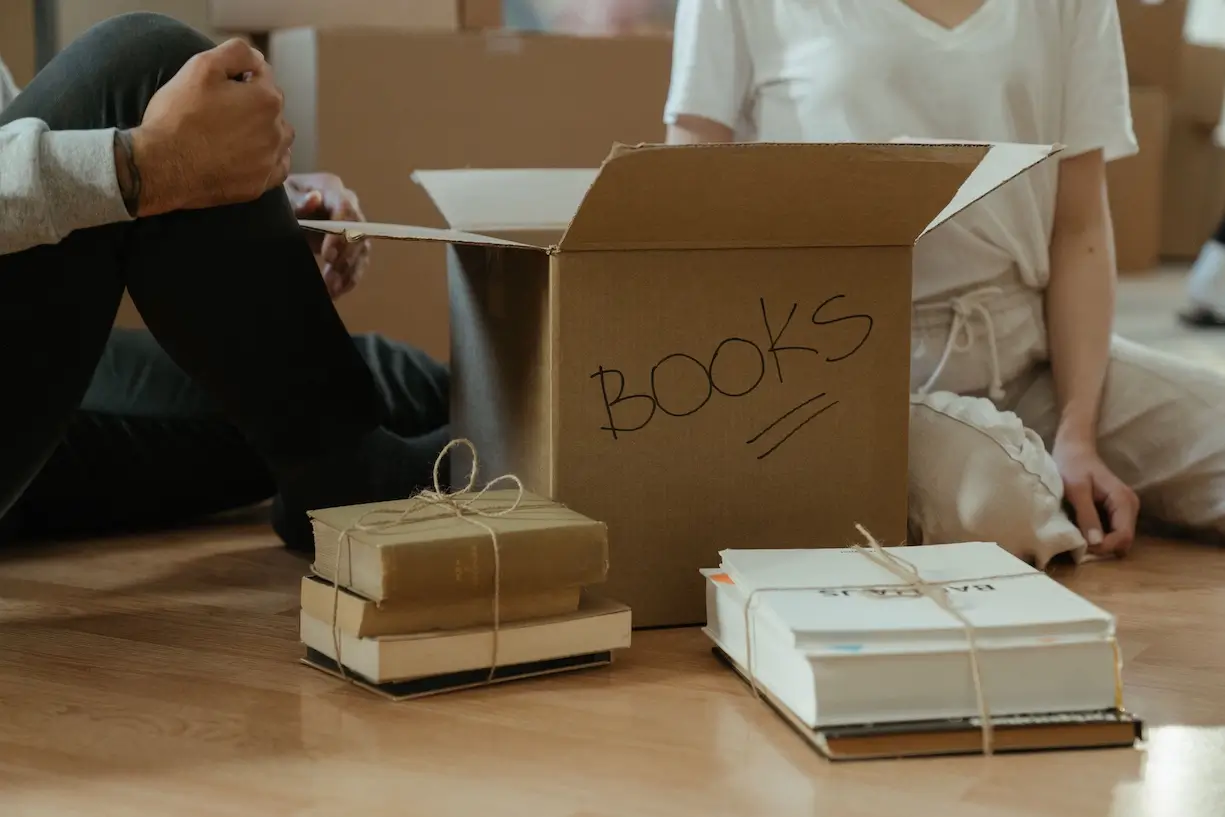
A lot of people seem to think that books are robust. Strong. Secure. Don’t need to be protected or cared for. After all, they’re just made of paper and glue, so other than being kept away from water, what more could they really need?
Of course, the reality is very different. It’s not only Dickens’ first editions or other antique hardbacks that need to be treated with care, even modern books can easily be damaged if they’re not stored correctly. Paper is fragile, prone to warping or even mould if it gets damp or discolouring if exposed to strong light. Paperbacks, without the stiff protection of a hardback jacket, can be bent out of shape. Even the glue holding the pages can weaken under certain conditions, leaving your book spine fragile and letting pages fall out.
Books of any age need to be treated with care when they’re stored. But what does that look like?
As experts in self-storage, we know how to store all kinds of items – including books. In this post, we’ll explore all the things you need to consider when choosing where and how to keep your books to make sure the process doesn’t damage them.
How to prepare your books for long-term storage
Our usual tips to prepare any item for long-term storage are to clean and then dry your items, making sure they are absolutely, completely dry before packing them away. Obviously, with books, it’s a little different.
You may not be able to pop books in a washing machine, but you should check them and remove any dirt or debris. Brush the tops and sides to make sure there isn’t a build-up of dust, and flick through the pages to check nothing has been left in them. Whether intentional or not, books can end up with some pretty unusual things caught between their pages, and even those that seem safe (like bookmarks) can damage your books if they’re packed away with them inside.
And you do still need to check your books are dry. If the books have previously been stored near a source of moisture (like a damp wall or in a humid room), the pages may absorb some of that water.
Taking the time to check your books are in a suitable condition to be stored will make sure any issues don’t spread and cause damage to any others.
What is the best way to pack books for long-term storage?
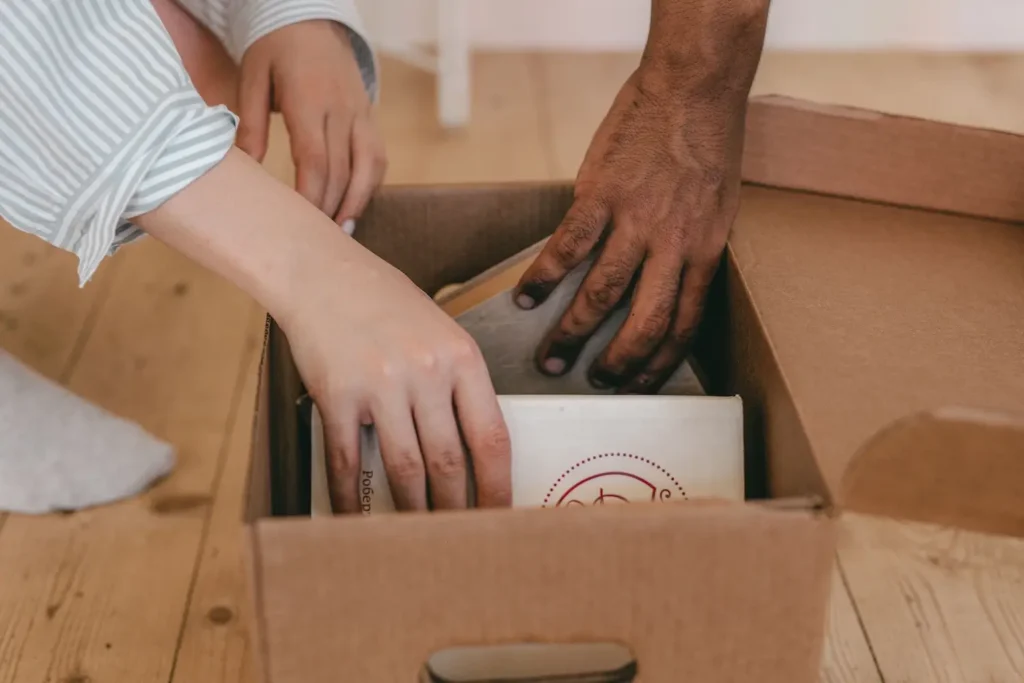
- Use plastic boxes. Plastic is stronger than card and will hold the weight of your books without bending or collapsing. They also provide stronger protection against pests or bugs. Where possible, use chemically stable plastics without any additives. This includes polyester, polyethene, polypropylene, polycarbonate and acrylic. Otherwise, these can leak chemicals that
- Place lids on the boxes. If dust and dirt get between the pages of books, it can be very hard to get them out again. Using boxes with lids will help keep them protected by keeping dust out.
- Add moisture absorbers. Books are easily damaged by damp, so it’s important that any moisture that gets into your boxes is kept away from them. Silica packets or other specialist moisture absorbers will ensure that if your boxes get damp, the water doesn’t get into the pages and warp them or even start to mould.
- Keep books upright if possible, otherwise, store flat. Books were designed to be stored upright on shelves. This is how they best distribute their own weight to protect them without over-compressing the spine or the pages. If your boxes aren’t big enough to fit books in when they’re upright, then you should lay them flat. Don’t try to compromise by packing them spine first, just keep them horizontal.
- Use acid-free packing materials. If you pack your books alongside other materials that need wrapping in protective paper, or if you pack your books loosely so they need padding, you need to be careful which materials you use to wrap with. They need to be acid-free and lignin-free. Otherwise, compounds from those materials can migrate into the paper of your books and damage the paper. This is a more serious concern for very long-term storage.
- Don’t overfill your boxes. Okay, this one is as much about you as your books. Books are quite heavy. Put a load of them together and they are really heavy. Stack boxes upon boxes full of them, and it’s likely the weight of the books will break the boxes and leave your books at risk again.
(The second risk of overfilled boxes is to anyone who tries to move them. Depending on the size of the box, you don’t want to move one when it is stuffed full of books – you might be surprised how heavy it is.)
For more tips on how to store books safely, see the Library of Congress website.
Where to store your books long-term
Even if your books are packed correctly, you still need to work out where to store them. The best place will always be somewhere temperature-and humidity-controlled, to protect your books from damp.
Of course, this isn’t realistic in many cases, so if you’re storing books in boxes in your home, avoid storing them in a garage or basement. If possible, keep them in a spare room that is kept at a relatively stable temperature. If this isn’t possible, a well-insulated loft is a suitable alternative, though you should still regularly check on your books to make sure no damage has occurred.
When keeping your boxes in the house, you also need to make sure not to store them in direct sunlight. This can discolour the pages, bleach jackets and spines and even weaken the glue that holds the pages in place.
If you have a lot of books – or a lot of other items to store at the same time – then a self storage unit is a good alternative. Pack your books correctly and check on them regularly, and they should be protected in a moisture-controlled self-storage space.
Wherever you choose to store them, do not stack your books directly on the floor – or even place the boxes directly on the floor. Either keep them on shelves or on a pallet, so that air can flow under the boxes and create a barrier to stop humidity travelling upwards.
Did you know? One of the most famous libraries in the world (the Bodleian at the University of Oxford) once stored the majority of their book collection in a salt mine in Cheshire. Being underground, the location was secure with no UV light that could damage the books, while the salt keeps the area free from pests and moisture.
While not an accessible location for most of us, these benefits are a good guide of what to look out for when choosing where to store your own books.
If you’re looking to store your books for a long period, while still keeping them in great condition, you need to consider the points above. Books are fragile, and storing them incorrectly will leave them at risk.
For anyone who lives in Bingham, Nottingham or the surrounding areas, our self-storage units offer a safe place to keep books, clothes and even furniture for prolonged periods. Speak to our team today to find out more about availability and prices.

