
It can be slightly unnerving to pack beloved items away to move house or store them, but when those items are delicate or fragile it can become fully overwhelming.
Finding the right storage option plays an important part in keeping them safe, but the journey to protecting your items begins with packing them correctly.
The dinner service you only bring out at Christmas and the mirror that’s hung in every house you’ve lived in are usually the things people worry about most when they’re moving home or clearing space. Knowing how to pack fragile items for storage properly is what gets them back out in one piece. In this guide, we’ll cover the best packing materials to use, how to wrap different items safely and how to arrange your boxes once they’re in your storage unit.
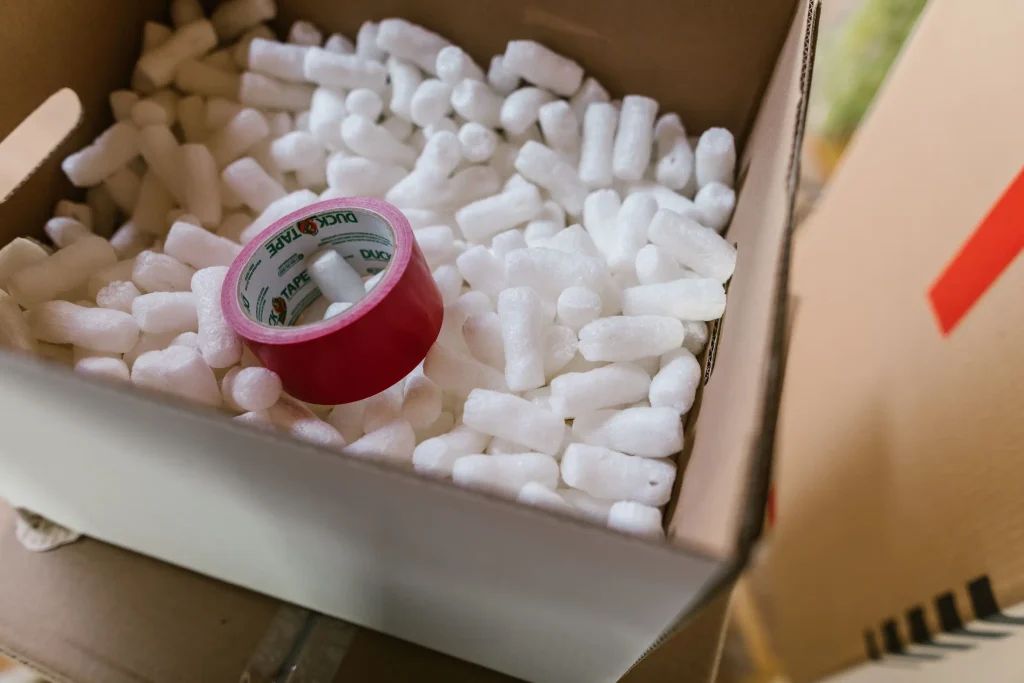
What is the best packing material for storage?
New, double-walled cardboard boxes are usually the best packing material for long-term storage.
With fragile items, it is always worth investing in brand new boxes to pack in. With older boxes you can never really be sure how strong they are or how degraded. Even if they still look strong they may be hiding weaknesses in the corners or other areas of high stress.
You should definitely not use second-hand boxes – say from a supermarket – for delicate items. These boxes could have been used or stored anywhere, which means they could have absorbed moisture over time that’s weakened them.
Plastic crates are also a great choice for fragile items, but they do tend to be more expensive to purchase. Not necessarily an issue if you’re only storing a small number of items, but more of a concern if you’re storing a lot.
What to use to protect fragile items
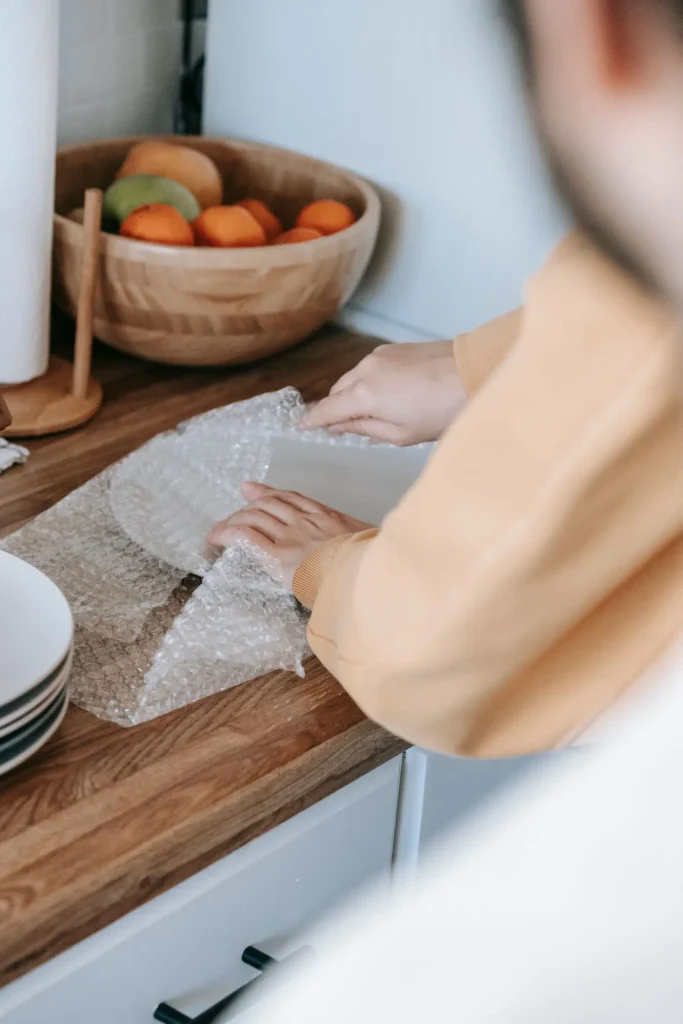
When you’re packing delicate items, you need to make sure they’re also wrapped and protected inside the box. Bubble wrap, foam sheets, towels or tea towels and packing paper are all great options for wrapping individual items.
Some things to remember are to use anti-static bubble wrap if you’re storing electronics. You should also use plain packing paper rather than newspaper, as the ink from papers can transfer onto china and glass if left for long periods of time.
For more advice on packing materials, see our post.
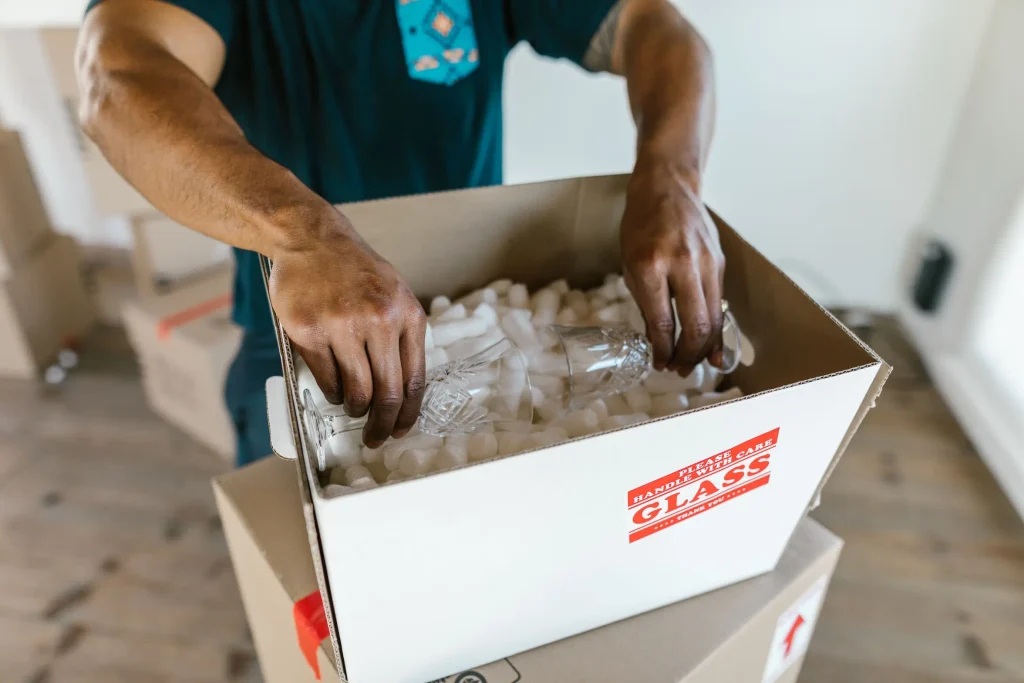
How to wrap fragile items for storage, step by step
With fragile items, you should always take the time to wrap pieces individually and place them carefully to avoid leaving any hollows or empty spaces between items that they could move around in.
Here’s a step-by-step guide to packing fragile items as safely as possible:
1. Find a clear space to pack in peace
The more you rush or less space you have, the more likely you are to drop items or break them. Set aside more time than you think you need, clear off a table or a large patch of floor and take your time while you pack. Otherwise, you can end up more stressed and more clumsy and both of these spell disaster for your fragile belongings.
2. Wrap each item individually
Whatever materials you’re using to protect your belongings, make sure to wrap every item separately. Otherwise, even if the outer box is carefully protected, your items might smash against each other inside it.
3. Fill hollow items with padding
Don’t just wrap protective layers around the outside of items. Inside hollow items like cups or glasses is a weak point too, so stop anything getting in them and cracking them from the inside by stuffing them.
4. Remove lids and wrap separately
Rather than wrapping materials around a jug or dish with its lid on, treat them as two separate items and wrap individually. This stops the lid banging against the item and damaging it.
5. Finish particularly delicate items with bubble wrap
For especially delicate items, like thin glasses, add one final outer layer of bubble wrap with the bubbles facing in. You should also tape the wrapping in place, though only against the wrapping paper, never directly on to the item itself as this could damage it in itself.
How to pack specific items
Plates and bowls
Wrap each item individually. For plates, stand them on their edges like records in a rack, rather than stacking them – if you stack them, too much pressure will be placed on the bottom plate. Especially when you include the weight of packing materials, or if they’re going to be stored for a long time.
Bowls can be nested together as their domed shape distributes the weight differently. However, do make sure to wrap each bowl properly first and put paper inside each individual bowl as well as around the outside to protect them.
Glasses and crystal
These are among the most fragile items commonly placed in storage, so it’s really worth taking the time to pack them properly. Always wrap them individually, with packing paper or wrap on the inside as well. Always put them at the top of the box so less weight is pressing on them.
If you have a big set, cardboard dividers hold them in place and stop them banging against each other, but they will still need individual wrapping too.
Mirrors, pictures and artwork
Framed items like mirrors or pictures easily collect dust, so make sure to clean them before storing them. Clean the frames, and wipe the glass surface with specialist glass cleaner then leave them to air dry to make sure you’re not packing them away with any moisture.
Use corner protectors to cover delicate corners, place a sheet or other soft material over the glass surface to make sure it doesn’t scratch then add bubble wrap across the entire item. Store them upright, and don’t pile anything on top of them.
Electronics
If you still have the original packing for electronic items, that’s always the best option to store it in as it offers the tightest fit to leave the items protected. Take out any batteries before storing as these can leak and damage the connectors and eventually stop your item being able to work.
Unplug any cables to stop them getting knocked or weakened under pressure against the box. If necessary label them to make sure you can reattach everything when you take it out of storage.
How to store boxes in your self-storage unit
You can spend hours carefully preparing your individual items for storage, but if you store them in your storage unit wrong, fragile items can still easily break.
You should always keep boxes off the floor to stop your boxes becoming damp. Even with items like china or glass that won’t be damaged by damp directly, moisture can weaken the cardboard and packing paper, leaving them at risk when you come to move them. Place them on shelves or on pallets to ensure air can circulate around your boxes, and leave a gap between the boxes and the walls.
Store heavier boxes or furniture lower down, and your fragile items towards the top. This is especially important if you’re storing long term as cardboard inevitably weakens, and it may start to collapse if heavier items are stacked on top of it.
You should leave a walkway so you can comfortably add and remove items without stretching too far. This is obviously a safety issue, but also important for delicate items, as you don’t want to risk dropping the boxes.
Tall thin items like mirrors or pictures should be stored upright and leaning against something stable, such as a wardrobe or tall furniture. Make sure they are at a secure angle, and not able to fall to the ground or move against other items.
Keep fragile items safe and secure in our self-storage units
If you’re taking the time to pack your fragile items pack carefully and individually, it’s equally important you also store them somewhere they’ll be kept safe.
Here at Bingham Self Storage, our insulated storage units are available for both long-term and short-term storage. Our facility has 24/7 CCTV and is in a discreet rural location, so whether you’re looking for somewhere to keep your belongings while you move home, or longer term storage while you downsize, you can trust even your fragile items will be as safe as possible.
Talk to us today to find out more about our safe and secure self-storage.

